
Apples: from objects to kin
Remembering relationship to apple trees (abhaill) as the ground to plant medicine

In this part of the world, the apple trees are bounding with fruit now. Red, yellow, green bright balls in amongst the craggy branches, and their older siblings as fermenting cakes dotting the ground below.
There are many people close to me that have the gift of apple trees in their gardens but tend not to be in relationship to the trees beyond an apple crumble or two. I was once volunteering at a well-known heritage skills charity in the West and was so disheartened that they were buying apples from Lidl, while an orchard of their own was blooming with the most wonderful diversity of apples. This is not a individual personality-trait problem, it’s cultural. In our weird Western society, we have forgotten our relationship to apple trees, along with so many more-than-human beings and the web of life as a whole really. It’s a manifestation of a deeper underlying issue.
We have been in relationship with apples on this island for thousands of years. The wild Irish crab apple (Malus Sylvestris or ‘abhaill’ as Gaeilge) is our native apple tree. It’s quite different to the large and sweeter apple cultivars that we tend to know. Some interesting notes:
7,000BC hunter-gatherers ate Malus Sylvestris crab apples in summer.
The first farming communities (4000-2500BC) ate the Irish crab apples, but also used the pips for decorating pottery, and burned the fruits in ritual / ceremony.
Medieval Ireland held the crab apple as a ‘noble of the wood’ and used the bark to make a yellow dye for wool (c. 400-1100). There were severe penalties for damaging apple trees.
Malus Sylvestris represented the letter Q in the Ogham alphabet.
Abhalls are very high in Vit C
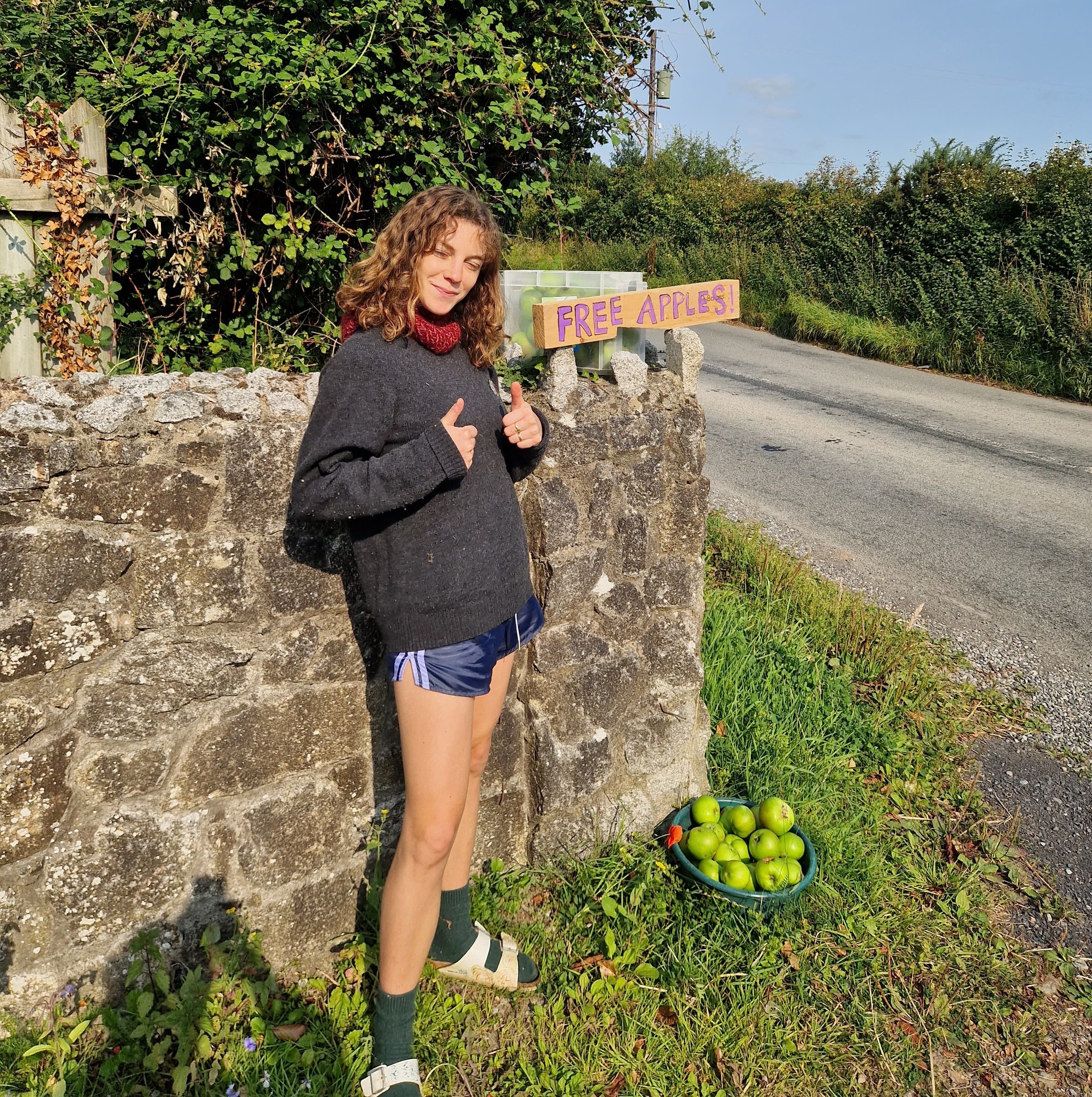
I believe we are slowly remembering these ways that never were really ‘lost’. We have just been distracted. The habitual convenience of supermarkets is a sticky and persistent force. But in experiencing the magic and joy in relating to and working with plants we tumble out of that narrow path and into worlds of discovery and remembering. Life becomes less about efficiency and quantitative judgements, and more about our way of being and relating.
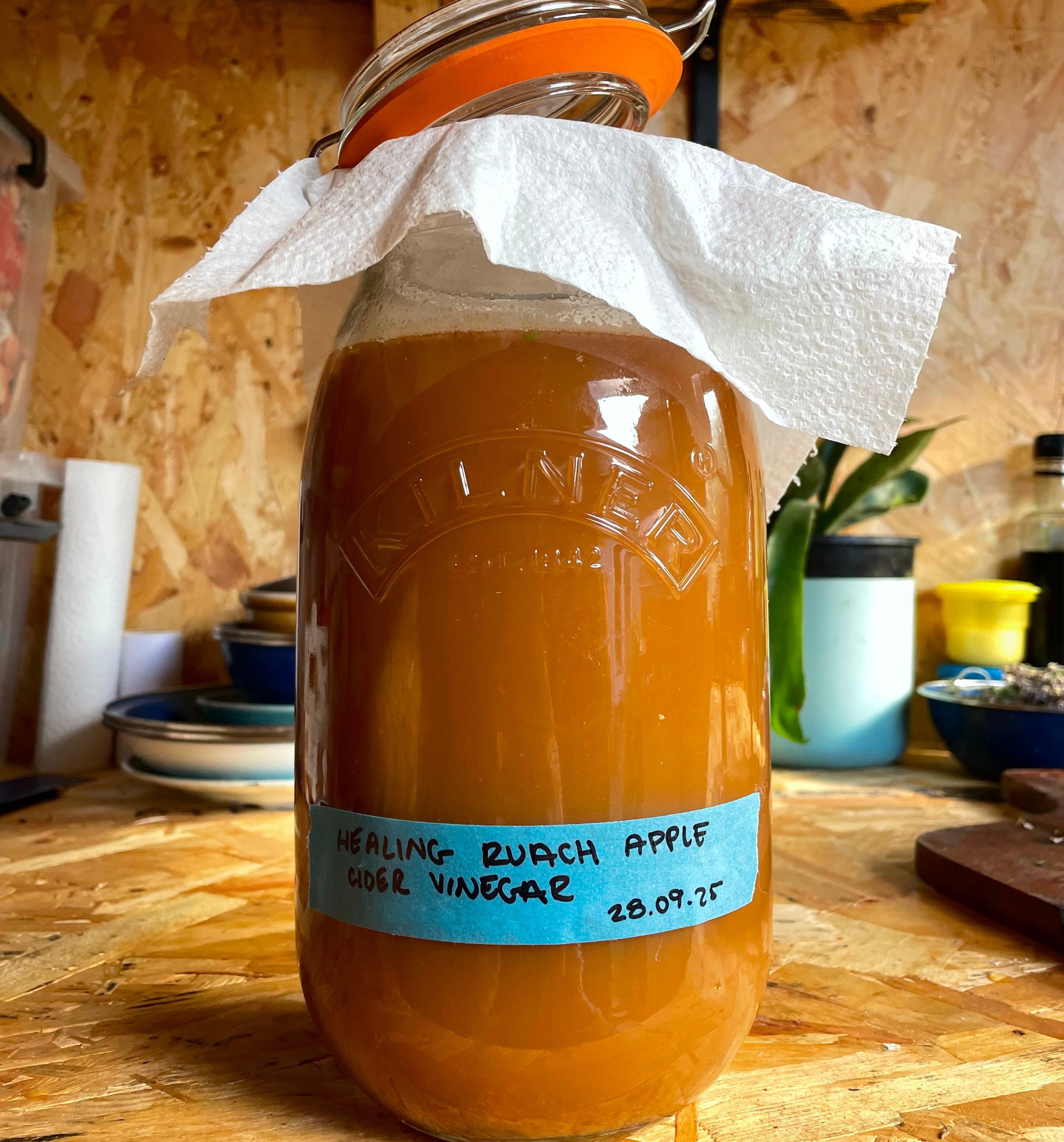
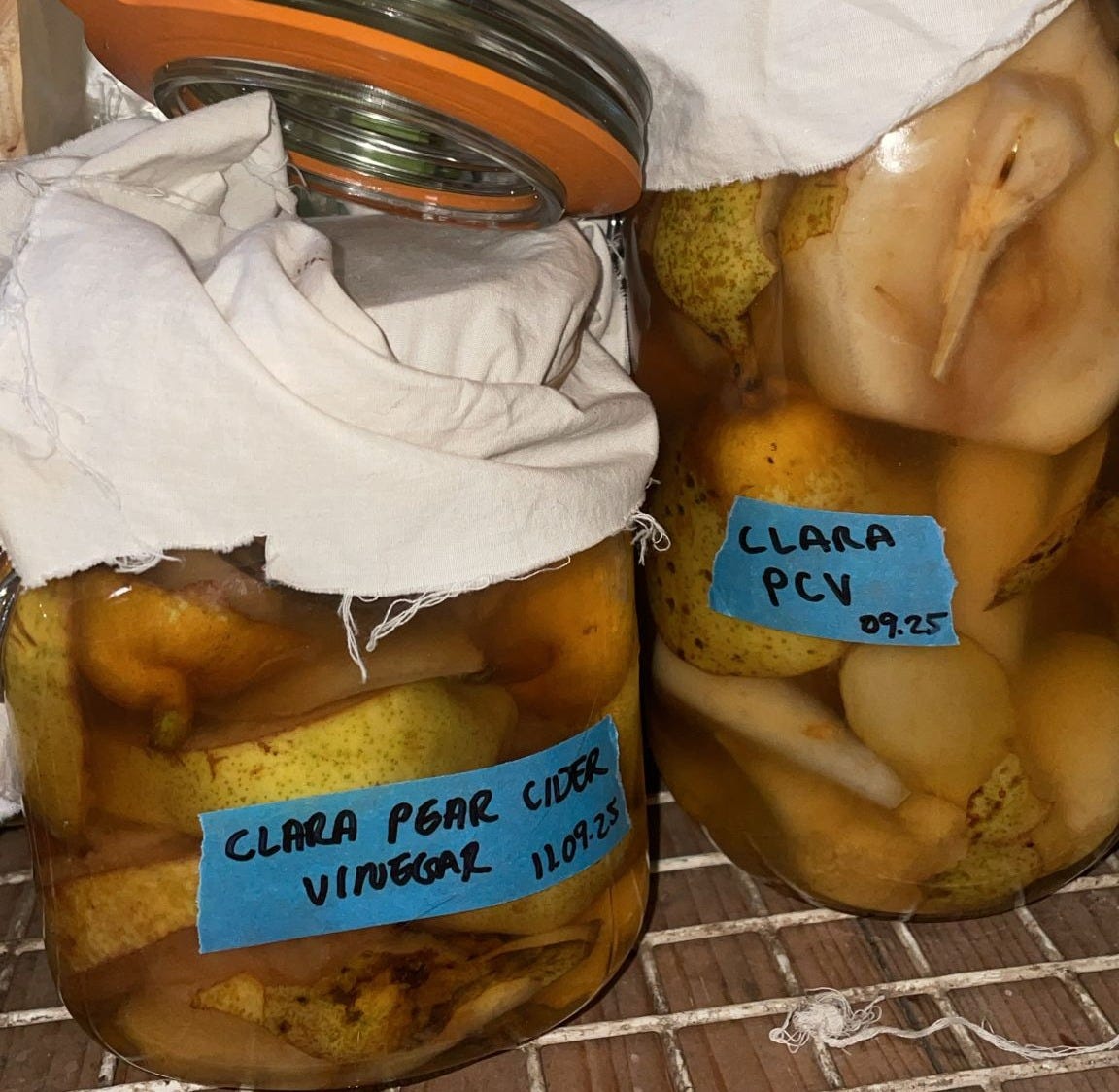
I have been experimenting with apple and pear cider vinegars these months and wanted to record some pictures and steps. It’s all trial+error and exploration, no perfection. Sometimes the fruit floats up and gets all funky, then I just give it all a stir and get those babies down into the harmonic fermenting liquid environment.
As I work with these fruit trees, I hope to not be in ‘taking’ mode, this way of being that is about ‘what can I get from this object?’. Rather, I intend to be in a creative, explorative relationship with the trees. I intend to respect their autonomy as beings, not objects for my taking.
Apple Cider Vinegar:
Core + dice + blend your apples
Use a muslin cloth (or mesh veg bag) to strain out the juice
Put the apple fibre aside (make biscuits/dog treats)
Put all of the juice in a large jar
At this point I added ACV mother that I was given at a workshop, but in previous times, I instead added:
a couple tablespoons of sugar and/or
some liquid from a store bought organic ACV (shake first to get the mother up from the bottom)
Cover with cloth and an elastic band, leave for 3-4 weeks, you can stir often at the beginning to get any bits floating at the top down into the mixture, the fermentation process will work its magic. A white-ish layer on top is a great sign, that is the mother and it’s working.
Other notes:
I don’t use measurements, just by feeling, and it works fine always
I have also made ACV without blending + juicing the apples. Just chop, add water + sugar and some store bought organic ACV.
Can be made with pears too!


Sources of inspiration: